


A Devotional as Review for the Sermon--> "Transform: Bread in the Wilderness"
Scripture Focus: John 6:1–15
There are seasons in life when it feels as if we are lost in a wilderness.
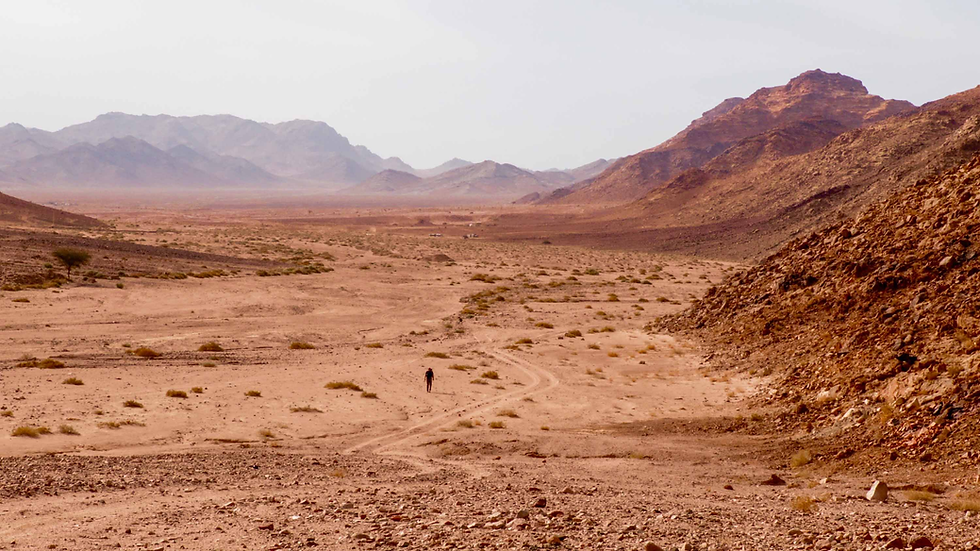
Not simply because things are difficult, but because we feel all alone in an empty place. The wilderness is where resources feel thin, answers feel delayed, and the future feels uncertain and tenuous. It is where the fear of “not enough” starts preaching louder than the promises of God. Not enough money. Not enough time. Not enough strength. Not enough opportunity. Not enough help. Not enough companionship.
And when we live too long under the pressure of not enough, we begin to adjust our thinking to scarcity. We hold tighter things. We dream smaller. We become suspicious of others. We become jealous of others. We start protecting fragments instead of trusting God with them. The wilderness does not only surround us. It enters us and we can't see anything but lack.
That is why John 6 is not only a miracle story. It is an adjustment to the prescription in our spiritual glasses.
A great crowd follows Jesus into a deserted place. They have seen His signs, but they do not yet understand what those signs reveal. They are drawn to His power, but still learning His identity. And before anyone else raises the question of hunger, Jesus lifts His eyes and sees the crowd.
That matters.
The disciples see numbers. Jesus sees people. Philip sees the impossibility. Jesus already knows what He is about to do. Andrew sees a boy with five barley loaves and two fish, then immediately hears how foolish it sounds against the size of the need. But Jesus sees more than scarcity. He sees provision hidden inside what others call insufficient.
This is often where transformation begins: not when the wilderness disappears, but when Christ changes what we are able to see inside it.
Many of us know Philip’s reflex well. We are skilled at measuring the deficit. We can calculate the gap, name the obstacle, identify the shortage, and prepare for disappointment before hope has even had time to breathe. We do this in our families, our finances, our churches, our communities, and our own inner lives. We call it being realistic. Sometimes it is. But sometimes our realism has been saturated with fear, and we are defeated before the battle has even begun.
Jesus does not shame Philip for seeing the problem. But He does reveal that Philip’s calculation is not the final truth. The problem is real, but it is not sovereign. The wilderness is real, but it is not Lord. The lack is visible, but it is not ultimate.

Enter the boy with his lunch.
Five barley loaves. Two fish. Ordinary food. Poor people’s bread. Nothing impressive. Nothing elite. Nothing that looks equal to the crowd. But in the hands of Jesus, what looks laughably small becomes the beginning of abundance.
This is where the devotional knife gets close to the bone: what have you dismissed in your life because it did not look like enough?
Maybe you have dismissed your gift because it does not look like someone else’s gift. Maybe you have dismissed your story because it carries too much struggle. Maybe you have dismissed your faith because it feels small. Maybe you have dismissed your offering because it seems too ordinary to matter. But John 6 reminds us that the question is not only, “How much do I have?” The deeper question is, “Whose hands have I placed it in?”
The miracle does not begin with a banquet. It begins with a boy’s lunch surrendered to Jesus.
And then Jesus tells the people to sit down.
That detail is tender. They are in the wilderness, yet there is grass. Enough grass for rest. Enough ground for the crowd to recline. The wilderness is still wilderness, but Jesus creates tablespace inside it. This is not panic. This is not emergency survival. This is kingdom hospitality. This is God preparing a table where human logic expected hunger.
Jesus takes the bread, gives thanks, and distributes it. The people eat “as much as they wanted.” Not scraps. Not rations. Not barely enough to keep moving. They are filled. Satisfied. Satiated.
And after everyone has eaten, there are leftovers. Twelve baskets full.
The leftovers matter because they reveal the character of the kingdom. God’s abundance is not private luxury. It is overflowing provision. It is enough for me without requiring lack for you. It is blessing that refuses to stop at the boundary of my own appetite. In the kingdom Jesus reveals, my neighbor does not have to go hungry for me to be full.
That may be one of the hardest truths for wilderness-shaped people to receive. Scarcity teaches us to compete. Christ teaches us to commune. Scarcity says, “Protect what little you have.” Christ says, “Place it in My hands.” Scarcity says, “There is not enough for everyone.” Christ says, “Gather up the fragments, so that nothing may be lost.”

This miracle points beyond bread in stomachs. It points to Jesus Himself. Whereas Moses distributed bread from Heaven (manna) in the wilderness, Jesus is the Bread of Heaven. He is not merely the one who gives provision. He is the provision. He is the One who enters our wilderness, sees our hunger, receives our insufficient offering, and reveals that the kingdom of God is larger than our fear.
So today, do not despise the small thing. Do not surrender your imagination to the wilderness. Do not assume that what you lack is more powerful than the Christ who sees you.
The wilderness may be real.
But Jesus already knows what He is about to do.
And in His hands, even what looks insufficient can become bread for the multitude.
Reflection Questions
Where in your life are you currently living under the fear of “not enough”? Be specific. Is it money, time, energy, opportunity, love, confidence, health, imagination, or faith? How has that fear shaped your decisions, your mood, or your relationships?
When you look at your life right now, do you identify more with Philip, Andrew, the boy, or the crowd? Are you calculating the impossibility, noticing something small but doubting its usefulness, holding an ordinary gift, or simply hungry and waiting to be fed?
What have you been dismissing as too small, too ordinary, too late, too weak, or too unimpressive for God to use? What would it mean, practically and spiritually, to place that “little” into the hands of Jesus?
How has the wilderness trained your vision? Have you become more anxious, suspicious, guarded, competitive, or resigned? What would need to shift for you to begin seeing your circumstances through trust instead of fear?
Where might God be calling you to become part of someone else’s overflow?
If the kingdom is not only about being filled but about leftovers that bless others, how might your provision, wisdom, testimony, resources, or presence become bread for another hungry person?


Comments